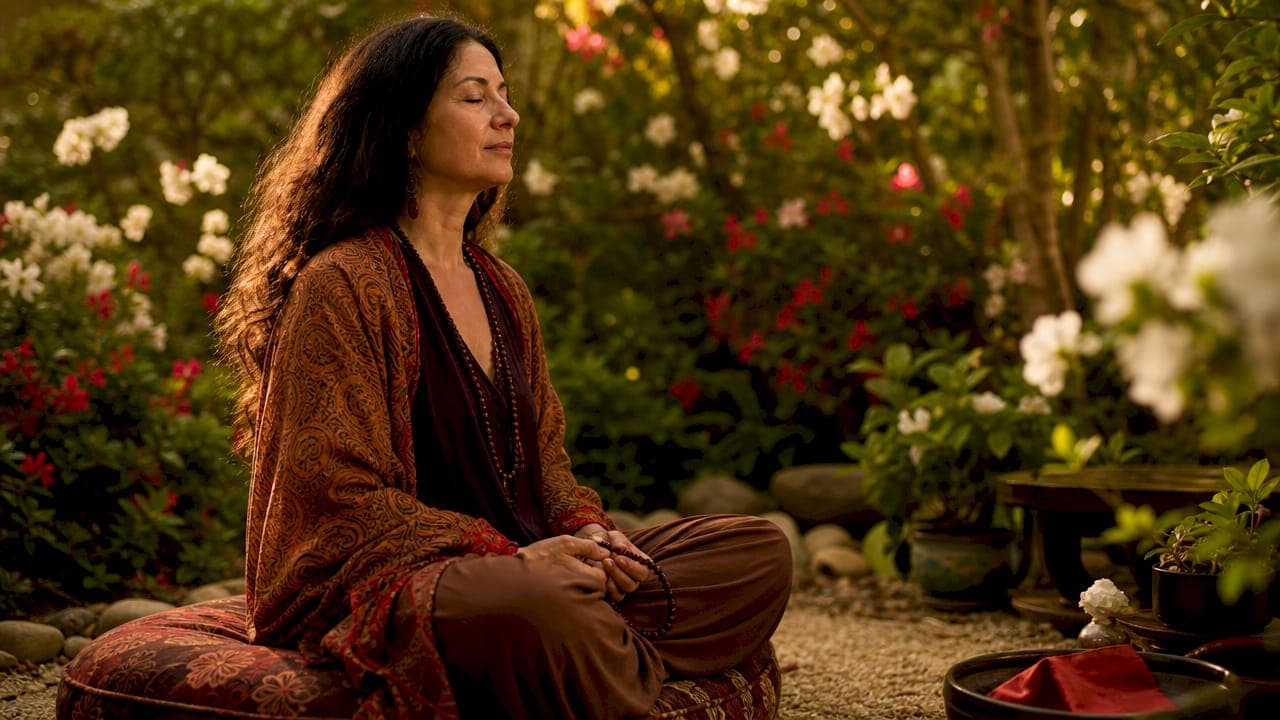
Mystical traditions for empowerment are defined as structured spiritual disciplines that cultivate inner strength, clarity, and alignment with universal principles through intentional practice. These are not passive belief systems. Vajrayana Buddhism, Hermetic meditation, Per-Ptah Egyptian esotericism, and Siddha Kali worship each offer specific techniques for awakening power that already lives inside you. What separates these paths from surface-level self-help is their insistence on inner transformation over external spectacle. If you have ever felt the pull of something deeper, something that whispers that your suffering is not the end of your story, these traditions were built for exactly that moment.
1. What are the key principles of mystical traditions for empowerment?
Every genuine mystical empowerment path shares a handful of foundational principles, regardless of its cultural origin. Understanding these principles before choosing a practice saves you years of wandering.
- Alignment with universal order. Traditions like Per-Ptah and Hermetic philosophy ground empowerment in alignment with Ma'at (cosmic truth and order) and the Hermetic Principles. Power that contradicts universal law collapses under its own weight.
- Unbroken continuity over force. Shaolin teachings describe strength as a quality that starts at the ground and flows without interruption. Sporadic bursts of effort produce nothing lasting.
- Cultivation of inner faculties. The Brahma Kumaris identify eight spiritual powers for transformation, including the power to positively change one's thinking. This means empowerment is a skill, not a gift.
- Restraint and ethical strength. Siddha Kali worship and Stoic philosophy both teach that true empowerment is mental alertness and resilience. Pythagoras called this the "strong soul" and Stoics used the Pancratiast metaphor to describe a fighter prepared for anything.
- Endurance over urgency. Energy mismanagement and impatience cause more failures in spiritual practice than lack of ability. The Roman proverb says it plainly: the impatient runner asks how close the finish line is, while the champion simply runs.
Pro Tip: Before choosing a tradition, ask yourself whether you are drawn to it for the experience it promises or the person it will make you. The second answer points toward genuine empowerment.
2. Vajrayana Buddhism and deity empowerment
Vajrayana, the "Diamond Vehicle" of Tibetan Buddhism, is one of the most structured mystical traditions for empowerment in the world. Its central practice is yidam meditation, in which the practitioner identifies completely with a chosen deity such as Tara, Vajrasattva, or Chakrasamvara. This is not worship in the conventional sense. You are training your mind to recognise its own enlightened nature by inhabiting it.
Empowerment in Vajrayana begins with a formal initiation called a wang, transmitted by a qualified lama. Without this transmission, the practices are considered incomplete. This matters because it places the tradition firmly in the realm of relationship and lineage rather than solitary self-improvement.
The daily practice involves mantra recitation, visualisation, and mudra. Over time, the practitioner dissolves the boundary between ordinary self and the deity's qualities, which include fearlessness, compassion, and clarity. These are not metaphors. They become lived capacities. For women healing from trauma or destructive cycles, this tradition offers a radical reframe: you are not broken, you are unrecognised.
3. Per-Ptah: the Egyptian chamber of five powers
Per-Ptah is an initiatory discipline drawn from ancient Egyptian esotericism, structured around five sequential powers: perception, word, power, order, and strength. It is one of the least widely known yet most precisely designed sacred techniques for empowerment in the Western esoteric tradition.
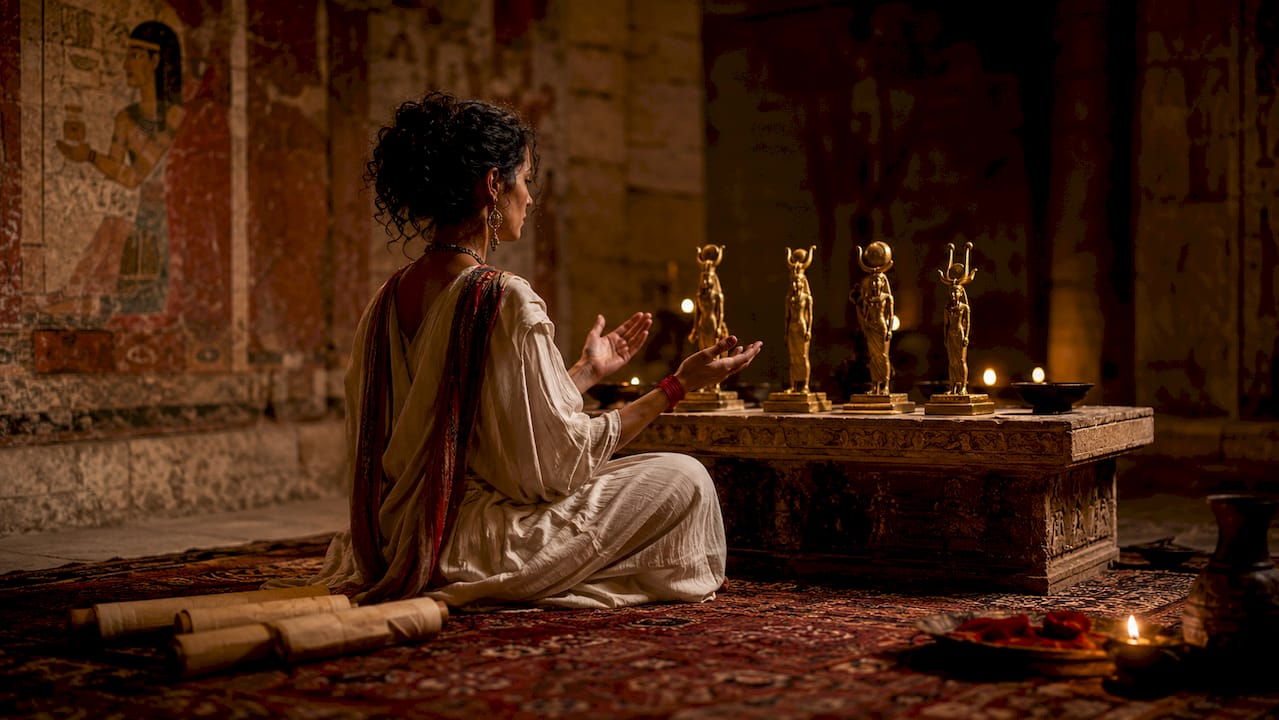
What makes Per-Ptah unusual is its insistence on readiness and silence. You do not advance because you want to. You advance because you are ready. The discipline demands non-defensive correction, meaning you accept feedback from the tradition itself rather than defending your current state. This is harder than it sounds, especially for anyone who has spent years protecting themselves from further harm.
The alignment sought is with Ma'at, the Egyptian principle of cosmic truth, balance, and right order. Per-Ptah does not promise dramatic experiences. It promises integrity. For seekers who have chased spiritual highs and found them hollow, this tradition offers something rarer: a practice that builds you from the inside out, slowly and without fanfare.
Pro Tip: If Per-Ptah appeals to you, begin by studying Ma'at as a living principle rather than a historical concept. Ask daily: where am I out of alignment? That question alone is the first gate.
4. Hermetic meditation and the Middle Pillar Ritual
Hermetic meditation uses active visualisation and symbolic work to develop inner faculties and access what practitioners call divine knowledge. The most well-known technique is the Middle Pillar Ritual, which activates a series of Kabbalistic energy centres along the central axis of the body, corresponding to the Sephiroth of the Tree of Life.
The ritual is not passive. You build each energy centre deliberately, using Hebrew divine names, colour visualisation, and breath. The result is a felt sense of vertical alignment, from crown to earth, that practitioners describe as both grounding and expansive. This is empowerment through meditation in its most structured Western form.
What distinguishes Hermetic practice from general mindfulness is its use of a coherent symbolic system. Every image, name, and colour carries specific meaning within the tradition. This precision is what makes the practice transformative rather than merely relaxing. The real power, as deep knowledge in this tradition confirms, is the transformation of the practitioner's psyche and energy alignment, not the ritual itself.
5. Shaolin internal arts and unbroken strength
The Shaolin approach to spiritual empowerment is built on a principle called silk-reeling, the idea that power flows continuously from the ground through the body without interruption. Strength that starts at the ground and travels through rootedness, breath control, and connection lasts far longer than muscular force applied in bursts.
This is ancient wisdom for strength that translates directly into psychological and spiritual life. The woman who has been through the worst and is still standing is not standing because she forced herself. She is standing because something in her remained unbroken. Shaolin internal arts teach you to cultivate that quality deliberately.
The practice includes Tai Chi, Qigong, and standing meditation. None of these look dramatic. That is the point. The most powerful practices in the Shaolin tradition are the quietest ones, because they are building something that cannot be shaken.
6. Siddha Kali worship and tantric empowerment
Siddha Kali worship is a Tantric tradition focused on the development of siddhis, spiritual perfections that arise as a by-product of disciplined mantra practice and inner alignment. Siddhis in this tradition are understood as expressions of dharmic alignment, used for fearless insight and social welfare rather than personal power for its own sake.
Kali is the goddess of time, transformation, and the destruction of ego. Working with her energy is not for the faint-hearted, and the tradition does not pretend otherwise. What it offers is a direct confrontation with everything you have been avoiding, held within a structured practice that gives you the tools to face it.
The mantra practice at the heart of this tradition is repetitive, precise, and cumulative. Each repetition builds a quality of inner fire that burns through old patterns. For women who have felt the pull of destruction in their own lives, this tradition reframes that fire as sacred rather than shameful.
7. The 3-minute INSPIRED Protocol
Not every empowerment practice requires years of initiation. The 3-minute INSPIRED Protocol, developed within contemporary spiritual intelligence frameworks, is a brief grounding and empowerment sequence that can be used multiple times daily. It combines breath, intention-setting, and present-moment awareness into a repeatable structure.
The protocol is particularly useful before challenging situations: a difficult conversation, a moment of self-doubt, or a decision that requires clarity. It does not replace deeper practice. It extends it into the moments when you need it most.
This is where ancient wisdom meets modern life. You do not have to choose between a rich esoteric tradition and a busy schedule. The INSPIRED Protocol is proof that the principles of mystical empowerment can be distilled into something you can use right now, in the middle of an ordinary Tuesday.
8. How to integrate these practices into daily life
Consistency is the only variable that separates those who transform from those who stay stuck. Experts recommend at least 10 minutes of daily quiet reflection as the minimum foundation for spiritual empowerment. Ten minutes is not a lot. It is, however, non-negotiable.
Here is a practical integration framework:
- Morning anchor. Choose one practice from the traditions above and commit to 10 minutes each morning before your phone, your inbox, or anyone else's needs enter your awareness. This is your time.
- Midday reset. Use the 3-minute INSPIRED Protocol before any situation that requires you to show up fully. This keeps the practice alive in real life rather than confined to a cushion.
- Evening reflection. Spend five minutes reviewing where you felt aligned and where you did not. Per-Ptah calls this non-defensive correction. You are not judging yourself. You are learning.
- Weekly deepening. Once a week, extend your practice to 30 minutes. Use this time for the more structured work: Middle Pillar visualisation, mantra recitation, or Qigong.
- Quarterly review. Every three months, ask honestly whether your practice is building something real. Are you more patient? More clear? Less reactive? These are the markers of genuine empowerment.
Pro Tip: Silence after practice is not wasted time. It is where integration happens. Sit for two minutes after every session without reaching for your phone. That silence is doing more than you realise.
9. Comparing mystical empowerment traditions: which path fits you?
| Tradition | Best for | Time commitment | Core empowerment gained |
|---|---|---|---|
| Vajrayana Buddhism | Seekers wanting structured lineage and deity work | Daily practice plus periodic retreats | Fearlessness, compassion, clarity |
| Per-Ptah | Those drawn to Egyptian esotericism and slow initiation | Long-term, years of progression | Integrity, alignment, inner order |
| Hermetic meditation | Western esoteric seekers comfortable with symbolism | 20 to 30 minutes daily | Psychic clarity, energy alignment |
| Shaolin internal arts | Those seeking embodied, physical spiritual practice | Daily movement practice | Unbroken strength, groundedness |
| Siddha Kali worship | Advanced seekers ready for transformative confrontation | Intensive mantra practice | Inner fire, fearless insight |
| INSPIRED Protocol | Beginners or those needing daily practical tools | 3 minutes, multiple times daily | Grounding, moment-to-moment clarity |
Beginners benefit most from starting with the INSPIRED Protocol or Hermetic meditation, both of which offer clear structure without requiring initiation. Advanced seekers ready for deeper confrontation will find Siddha Kali worship or Per-Ptah more demanding and more rewarding. Shaolin internal arts suit anyone who learns through the body rather than the mind.
Key takeaways
Genuine mystical empowerment requires alignment with universal principles, unbroken consistency, and the patience to let inner transformation precede outer change.
| Point | Details |
|---|---|
| Consistency over intensity | Ten minutes of daily practice builds more than occasional dramatic experiences. |
| Inner alignment is the goal | Traditions like Per-Ptah and Hermetic meditation prioritise psychic and ethical alignment, not spectacle. |
| Choose by temperament | Match your tradition to how you learn: through body, symbol, mantra, or structured initiation. |
| Endurance is the practice | Impatience and energy mismanagement cause more failures than lack of ability or talent. |
| Brief protocols extend deep work | The 3-minute INSPIRED Protocol keeps empowerment alive in daily life between longer sessions. |
What I have learned from walking these paths
I have been the woman who wanted the lightning bolt. I wanted the vision, the breakthrough, the moment everything changed. I chased it through different traditions, different teachers, different rituals, and I kept arriving at the same place: exhausted and wondering why I still felt the same inside.
What actually changed me was not the dramatic moments. It was the Tuesday mornings when I showed up anyway. The ten minutes of stillness when I had nothing to offer except my presence. The slow, unglamorous work of noticing where I was out of alignment and correcting it without drama.
Per-Ptah taught me that readiness is not something you manufacture. Shaolin arts taught me that power does not announce itself. Hermetic practice taught me that the ritual is the container, not the content. The content is you, changing, slowly, in the dark, like a seed that does not know yet what it is becoming.
If you are at the beginning of this, or if you have been at it for years and feel like nothing is working, I want to say this directly: the traditions in this article are not magic tricks. They are mirrors. What they show you is real. What you do with that reflection is the practice.
Be patient with yourself. The sweetest roses really do come from the worst soil.
— Laura
How Lauramaelstrom supports your empowerment path
If something in this article stirred something in you, that is not an accident. That is recognition.
Lauramaelstrom exists for exactly this moment: when you know something needs to change but you are not sure where to begin, or when you have been doing the work alone for too long and need someone who genuinely understands the terrain. The platform combines esoteric wisdom, trauma recovery, and practical spiritual mentoring into a space built specifically for women who are done surviving and ready to thrive. Whether you are drawn to one-on-one coaching or a self-paced programme, start here and find the support that meets you where you actually are, not where you think you should be.
FAQ
What are mystical traditions for empowerment?
Mystical traditions for empowerment are structured spiritual disciplines, including Vajrayana Buddhism, Hermetic meditation, and Per-Ptah esotericism, that cultivate inner strength and clarity through intentional practice and alignment with universal principles.
How long does it take to see results from these practices?
Experts recommend a minimum of 10 minutes daily for foundational spiritual empowerment, with consistency over months being the primary driver of genuine transformation rather than intensity or duration of individual sessions.
Can beginners access mystical empowerment practices?
Yes. The 3-minute INSPIRED Protocol and Hermetic meditation both offer clear entry points without requiring prior initiation or lineage connection, making them practical starting points for anyone new to esoteric traditions for self-discovery.
Is Vajrayana Buddhism suitable for trauma recovery?
Vajrayana's yidam practice offers a structured framework for recognising one's own enlightened nature, which many practitioners find profoundly supportive in trauma recovery. Working with a qualified teacher is strongly recommended before undertaking advanced deity practices.
What is the difference between siddhis and general spiritual empowerment?
Siddhis are specific spiritual perfections arising from disciplined Tantric practice, understood in Siddha Kali worship as by-products of inner alignment rather than goals in themselves. General spiritual empowerment refers more broadly to the cultivation of clarity, resilience, and ethical strength across any tradition.