
Shadow work rituals are structured practices designed to safely explore and integrate the hidden parts of yourself, the unconscious patterns, disowned emotions, and buried beliefs that quietly shape your life. In Jungian psychology, this process is called shadow integration, and the shadow self exercises and symbolic rituals used to access it range from candlelit obsidian ceremonies to raw journaling dialogues. These shadow work ritual examples are not about tearing yourself apart. They are about becoming whole. Done with intention and care, they are some of the most honest and transformative work you will ever do.
1. what are shadow work ritual examples and why they work
Shadow work ritual examples are repeatable, intentional practices that create a safe container for meeting your unconscious self. The term "shadow" comes from Carl Jung, who described it as the part of the psyche holding everything you have rejected, suppressed, or never been allowed to express. That includes not just shame and rage, but also positive potentials like authentic ambition, creativity, and fierce self-worth. The shadow is not your enemy. It is your unlived life.
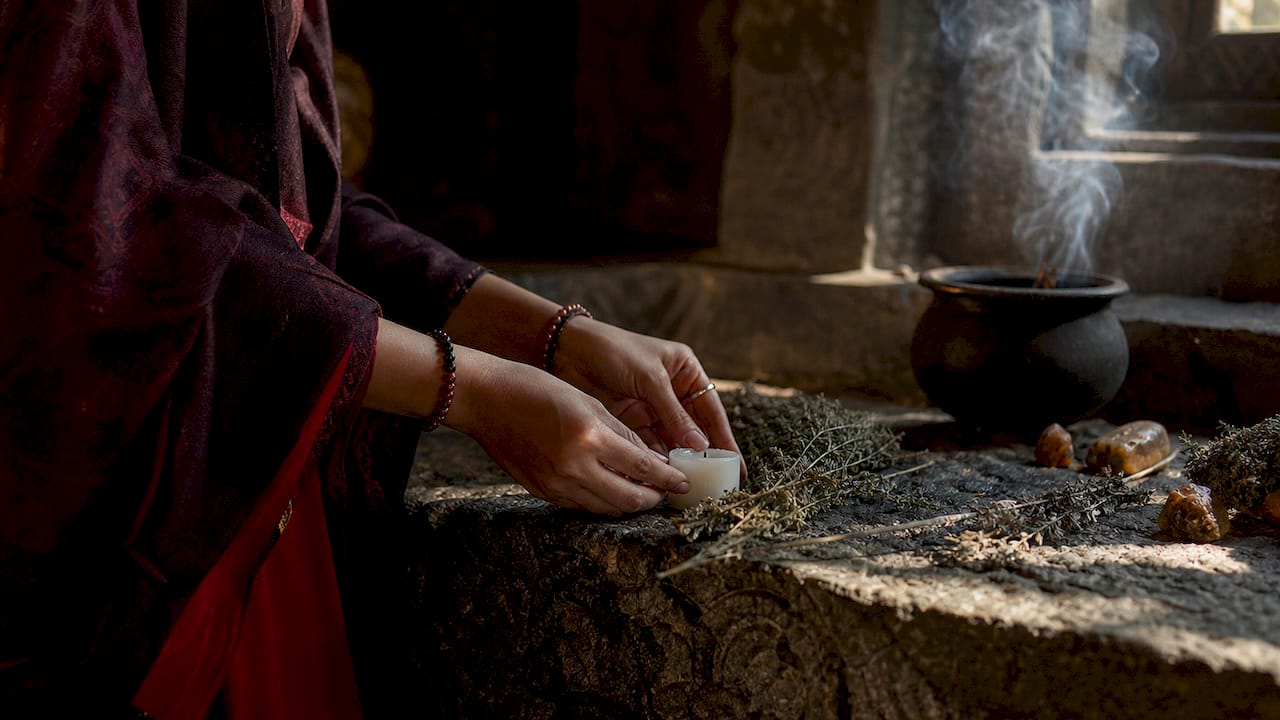
Rituals work because they signal to your nervous system that something intentional is happening. Lighting a candle, writing in a dedicated journal, or sitting before a black obsidian mirror all tell your body and mind: this is a safe space. That container matters enormously when you are asking yourself to feel things you have spent years avoiding.
2. how to structure shadow work sessions safely
Effective shadow work sessions run for 15–30 minutes, two to three times per week. That frequency maintains emotional stability without pushing you into overwhelm. Think of it like strength training. You do not lift every day at maximum weight. You build gradually, and you rest.
For deeper ritual work, integration sessions last between 45 and 90 minutes and include three distinct phases: preparation, the ritual itself, and aftercare. Each phase matters equally.
Preparation includes:
- Setting a clear intention (for example, "I want to understand why I shut down when I feel criticised")
- Grounding yourself with slow breath, bare feet on the floor, or a few minutes of stillness
- Choosing your tools: journal, candle, obsidian stone, or a quiet space
Aftercare includes:
- Drinking water and eating something grounding, like fruit or toast
- Writing a brief closing note about what surfaced
- Doing something gentle and ordinary, like a short walk or making tea
Overdoing shadow work daily causes destabilisation. If you are already in a state of stress or emotional flooding, postpone the session. Your nervous system needs to be regulated enough to process what comes up.
Pro Tip: Keep a dedicated shadow work notebook separate from your daily diary. The physical separation signals to your unconscious that this space is different, and it makes tracking patterns over weeks far easier.
3. shadow work ritual examples: journaling practices
Journaling is the most accessible of all shadow work techniques, and it is far more structured than free writing. The most effective approach uses documented emotional triggers rather than vague introspection topics. Vague questions produce vague answers. Specific triggers produce real material.
Trigger mapping journaling
Start by writing down three moments from the past week where your emotional reaction felt disproportionate to the situation. Perhaps you felt a flash of rage when someone interrupted you. Perhaps you went cold when a friend received praise. These outsized reactions are doorways. They point directly to something the shadow is holding.
Once you have your trigger, write freely about it using these prompts:
- What did I feel in my body when this happened?
- What story did I immediately tell myself about the other person?
- When did I first feel this way? How old was I?
- What part of myself am I protecting by reacting this way?
Shadow dialogue journaling
This technique involves writing a direct conversation between your conscious self and the shadow part that was activated. You write both sides. It sounds strange until you try it, and then it becomes one of the most revealing practices you will ever encounter.
Begin with: "Shadow, I noticed you showed up when [trigger]. What do you want me to know?" Then write the response without censoring it. Let it be ugly, childish, or furious. That rawness is the point.
Pro Tip: If the dialogue feels blocked, switch your writing hand. Writing with your non-dominant hand bypasses the inner critic and often produces startlingly honest material.
4. the obsidian shadow integration ritual
The Obsidian Shadow Integration Ritual is a symbol-based practice that uses physical objects to externalise and engage with the shadow. It draws on the reflective and protective properties attributed to black obsidian in esoteric traditions, and it works because the symbolic language of ritual speaks directly to the unconscious in a way that analytical thinking cannot.
You will need a piece of black obsidian, one black candle and one white candle, a journal, and a glass of water. The ritual framework of black and white candles alongside journaling and water grounds the experience and symbolises the relationship between the conscious self and the shadow.
The ritual unfolds in four steps:
- Light the black candle and sit quietly, allowing yourself to feel the weight of whatever you have been avoiding. Name it aloud or in writing.
- Hold the obsidian and speak to the shadow quality directly. Say: "I see you. I am not afraid of you. What do you need from me?"
- Write whatever arises without editing. Let it be raw.
- Light the white candle as a symbol of integration and conscious choice. Write one sentence about how you will honour this shadow quality in a healthy way.
Close by drinking the water and sitting in silence for two minutes. The water and the stillness are not decorative. They are the aftercare that brings you back into your body.
5. active imagination as a shadow work practice
Active imagination is a Jungian technique that involves entering a waking, semi-meditative state and allowing images, figures, or scenes to arise spontaneously. You then engage with those figures as if they are real. This is one of the more advanced shadow self exercises, and it produces material that journaling alone cannot always reach.
Sit comfortably, close your eyes, and focus on a strong emotion or a recurring dream image. Allow a figure to form around it. It might be a person, an animal, or an abstract shape. Do not force it. When something appears, begin a dialogue. Ask it what it wants. Ask it what it is protecting. Ask it what it has been trying to tell you.
Afterwards, write down everything you experienced in as much detail as possible. The figures that appear in active imagination are not random. They are the shadow speaking in its own language.
6. how rituals move you from recognition to real change
About 80% of people who begin shadow work stall at the recognition phase. They see the pattern, feel the emotion, and then... nothing changes. This is the most common and most painful sticking point. Recognition without integration is just suffering with better vocabulary.
The missing step is behavioural. A successful integration session concludes with a concrete plan for a specific real-world adjustment. Not a vague intention like "I will be less reactive." A specific commitment like "When my manager interrupts me in tomorrow's meeting, I will finish my sentence calmly."
"True shadow work integration happens through subtle behavioural moments: catching yourself mid-pattern and choosing differently." — Depth of You, Jungian Guide
Rituals support this by creating a formal closing step. At the end of every session, write one behavioural commitment. Make it small, specific, and achievable within the next 48 hours. Then, at your next session, open by reviewing whether you followed through. This loop of intention, action, and reflection is where real integration lives.
Behavioural commitments that emerge from ritual work often look like:
- Setting a boundary with a family member you have been appeasing for years
- Speaking your actual opinion in a conversation where you would normally go quiet
- Allowing yourself to receive a compliment without deflecting it
- Choosing rest instead of compulsive productivity when you feel the urge to prove your worth
7. comparing shadow work ritual types: which suits you?
Different rituals serve different needs. This table gives you a clear overview so you can choose the right practice for where you are right now.
| Ritual Type | Best For | Emotional Intensity | Accessibility |
|---|---|---|---|
| Trigger mapping journaling | Beginners identifying patterns | Low to moderate | High: pen and paper only |
| Shadow dialogue journaling | Intermediate practitioners | Moderate | High: pen and paper only |
| Obsidian Shadow Integration | Those drawn to symbolic work | Moderate to high | Medium: requires specific tools |
| Active imagination | Advanced practitioners | High | Low: requires practice to access |
| Movement-based practice | Those who process through the body | Moderate | High: no tools needed |
Beginners benefit most from starting with journaling-based practices. They are grounded, accessible, and produce clear written records you can track over time. Symbol-based rituals like the obsidian ceremony add depth once you are comfortable sitting with difficult emotions. Active imagination is best approached after several months of consistent practice, ideally with the support of a therapist or mentor familiar with Jungian work.
Mixing ritual types across a week creates the most well-rounded practice. You might journal on Tuesday, do the obsidian ritual on Friday, and use a short body-based practice like shaking or conscious movement on Sunday.
Key takeaways
Shadow work rituals produce lasting change only when recognition is followed by specific, committed behavioural action in daily life.
| Point | Details |
|---|---|
| Structure your sessions | Practise for 15–30 minutes, two to three times per week, with grounding and aftercare. |
| Use specific triggers | Document disproportionate emotional reactions as focal points, not vague topics. |
| Choose the right ritual | Match the ritual type to your experience level, starting with journaling before symbolic work. |
| Close with a commitment | End every session with one concrete behavioural plan to act on within 48 hours. |
| Expect a long process | Real integration takes months or years of consistent effort, not single-session breakthroughs. |
What i have learned about staying the course
I have done this work in the dark, on the floor, crying into a journal at two in the morning. I have also done it calmly, with candles lit and tea cooling beside me. Both count. Both matter. What I know now, after years of this practice, is that the rituals are not the magic. The showing up is the magic.
The most common thing I see in women who come to me is that they do the work intensely for two weeks, hit something painful, and then disappear from the practice for months. I understand that impulse completely. When the shadow shows you something you have been running from for decades, the instinct is to run again. But that is exactly the moment to slow down, not to stop.
Shadow work is not a quick fix. It is not a weekend retreat that resolves everything. It is a relationship with yourself that you tend over time, the way you tend a garden. Some seasons you dig deep. Some seasons you just water and wait. Both are part of the process.
What I would tell you is this: respect your limits. If a session brings up more than you can hold, close it gently and do your aftercare. You are not failing. You are being wise. The shadow will still be there next time, and you will be more ready for it. Self-forgiveness is not a detour from this work. It is the work.
— Laura
Ready to go deeper with your shadow work?
If you have been circling the edges of this work and you are ready to go further with real support, Lauramaelstrom offers courses and one-on-one coaching built specifically for women who are done surviving and ready to actually live. The resources at Lauramaelstrom combine psychology, spirituality, and hard-won personal experience to give you a structured path through the patterns that keep pulling you back.
You do not have to figure this out alone. Whether you are just beginning or you have been doing shadow work practices for years and feel stuck, there is guidance here that meets you where you are. The work is yours. The support does not have to be.
FAQ
What are the best shadow work ritual examples for beginners?
Trigger mapping journaling and shadow dialogue journaling are the most accessible starting points. Both require only a pen and paper, and they produce clear, trackable material from your first session.
How often should i practise shadow work rituals?
Two to three times per week for 15–30 minutes is the recommended frequency for maintaining emotional stability. Daily practice risks destabilisation, particularly if you are already under stress.
What is the difference between shadow work and journaling?
Standard journaling records thoughts and events. Shadow work journaling uses specific prompts tied to emotional triggers to surface and engage with unconscious patterns, making it a more structured and psychologically focused practice.
How do i know if my shadow work ritual is working?
Progress shows up in daily life, not just in sessions. You will notice yourself catching a familiar pattern mid-action and choosing differently. That moment of pause and choice is integration in practice.
Is shadow work safe to do alone?
Short, structured sessions focused on specific triggers are generally safe for most people. If you find that sessions consistently leave you destabilised or unable to function, working with a therapist or mentor familiar with depth psychology is the wiser path.